HOW TO SELL A SMALL BUSINESS WITHOUT A BROKER

Where to Advertise a Business for Sale in 2026: A Seller’s Guide

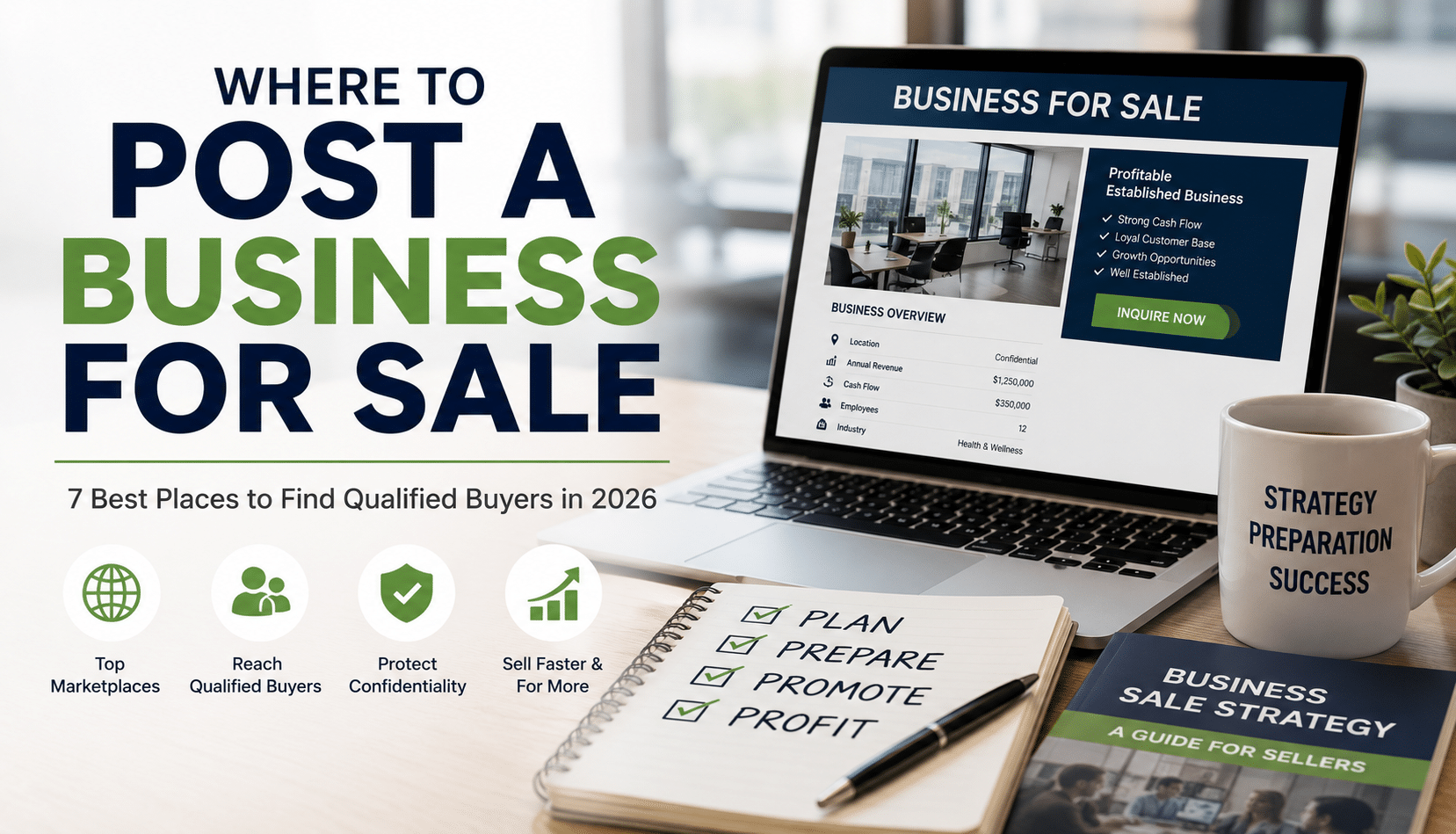
where to post a business for sale

Selling your business requires more than publishing an online listing. The right advertising strategy helps you reach qualified buyers, protect confidential information, and position your company for a successful transaction.

Knowing where to advertise a business for sale is essential, whether you own a local service company, manufacturing operation, retail store, or e-commerce business. Different platforms attract different buyers, and choosing the right channels can influence the quality of inquiries you receive.

This guide explores the leading business-for-sale marketplaces, alternative advertising channels, and strategies for attracting serious buyers.

Why Your Advertising Strategy Matters

Many owners assume listing their company on a popular marketplace is enough. However, acquisition buyers discover opportunities through online platforms, professional networks, industry connections, and direct outreach.

Individual entrepreneurs may prioritize consistent cash flow, while strategic buyers often seek established customer relationships, experienced employees, or opportunities to expand their operations.

A targeted advertising strategy helps you reach relevant prospects, communicate your company’s strengths, and maintain confidentiality.

The objective isn’t simply generating inquiries. It’s attracting financially qualified buyers who recognize your business’s value and have the resources to complete an acquisition.

Where to Advertise a Business for Sale: 7 Effective Channels

The right advertising channels depend on your industry, business model, asking price, and ideal buyer. Consider these seven options when developing your marketing strategy.

1. BizBuySell

BizBuySell is an established marketplace for buying and selling businesses in the United States.

It features restaurants, retail stores, service companies, manufacturing operations, and franchises. Its audience includes entrepreneurs and investors actively exploring acquisition opportunities.

A professional listing highlighting your financial performance, operating history, and competitive advantages can help attract relevant prospects.

Visit BizBuySell

2. BizQuest

BizQuest provides another advertising channel for established businesses across multiple industries and geographic markets.

Before purchasing additional listings, check whether your existing marketplace package already distributes advertisements to affiliated websites.

Focus your advertising budget on channels that provide meaningful exposure to your target buyers.

Visit BizQuest

3. BusinessBroker.net

BusinessBroker.net offers another option for owners seeking exposure to prospective acquisition buyers.

When evaluating this platform, compare listing packages, advertising costs, confidentiality features, and available industry categories.

Consider whether its audience aligns with your business’s size, location, and financial profile.

Visit BusinessBroker.net

4. BusinessesForSale.com

BusinessesForSale.com provides exposure to buyers exploring acquisition opportunities across different industries and geographic markets.

It may be particularly relevant for companies with transferable operations or potential appeal beyond their immediate location.

Prepare clear financial and operational information to help prospective buyers evaluate your business.

Visit BusinessesForSale.com

5. Flippa

Flippa specializes in digital business transactions, including e-commerce stores, SaaS companies, content websites, and other online operations.

Digital buyers typically examine recurring revenue, website traffic, customer acquisition costs, operating margins, and the transferability of digital assets.

If you’re selling an online business, prepare reliable financial records and supporting performance data before advertising.

Visit Flippa

6. LinkedIn

LinkedIn provides opportunities to connect with acquisition entrepreneurs, investors, executives, and strategic buyers.

Rather than publicly announcing your business is for sale, identify prospects whose acquisition objectives align with your company.

Confidential outreach can be particularly valuable for established businesses with specialized capabilities or attractive growth opportunities.

7. Industry Networks and Strategic Buyers

Potential buyers may already operate within your industry.

Competitors, suppliers, distributors, and companies seeking geographic expansion may have strategic reasons to acquire your business.

Industry associations and professional networks can help identify these prospects. However, approach competitors carefully and establish appropriate confidentiality protections before sharing sensitive information.

Where to Advertise a Business for Sale Based on Your Industry

Your industry and target buyer should determine which advertising channels receive priority.

Business type Advertising channels
Local service business BizBuySell, BizQuest
Restaurant Business marketplaces, industry networks
Manufacturing Business marketplaces, strategic buyers
Franchise Business marketplaces, franchisor-approved channels
SaaS Flippa, digital acquisition networks
E-commerce Flippa
Professional practice Industry-specific networks
Established regional company Strategic buyers, LinkedIn

Advertising across complementary channels can increase exposure. However, prioritize platforms that attract buyers interested in businesses like yours.

How to Create a Listing That Attracts Qualified Buyers

Once you’ve decided where to advertise a business for sale, focus on presenting your company professionally.

An effective listing should explain what your business does, demonstrate its financial strengths, and communicate why it represents an attractive acquisition opportunity.

Include your operating history, general location, products or services, revenue, cash flow, competitive advantages, and documented growth opportunities.

Avoid exaggerated claims or unsupported financial projections. Buyers should be able to verify the information you provide during due diligence.

Your listing should generate interest without revealing confidential customer, employee, or operational information prematurely.

Protect Confidentiality and Qualify Buyers

Confidentiality is essential when advertising a privately held business.

An unexpected announcement can create uncertainty among employees, customers, and suppliers. Competitors may also attempt to obtain sensitive information by presenting themselves as potential buyers.

Begin with a confidential listing that describes your company without revealing its identity.

Before sharing detailed financial statements, screen prospective buyers and obtain appropriate nondisclosure agreements.

Ask about their acquisition objectives, available capital, financing plans, industry experience, and anticipated purchase timeline.

A structured qualification process helps you concentrate on credible prospects while protecting your business throughout the transaction.

Common Mistakes When Advertising a Business for Sale

Even profitable companies can struggle to attract serious buyers when their marketing strategy is poorly executed.

Overpricing is a common obstacle. Buyers evaluate acquisition opportunities based on financial performance, perceived risks, and future earning potential.

Incomplete listings, disorganized financial records, and unrealistic growth projections can also discourage interest.

Other mistakes include relying on a single advertising platform, responding slowly to inquiries, and disclosing confidential information too early.

Before advertising, consider obtaining a professional business valuation and organizing your financial documentation.

Thorough preparation supports a more credible listing and can help reduce unnecessary delays during negotiations.

Frequently Asked Questions

Where is the best place to advertise a business for sale?

BizBuySell, BizQuest, BusinessBroker.net, BusinessesForSale.com, and Flippa are platforms worth considering. The appropriate choice depends on your industry, business model, location, and target buyer.

Can I advertise my business without a broker?

Yes. Owners can market their businesses independently through online marketplaces and professional networks. However, managing buyer inquiries, negotiations, confidentiality, and due diligence requires preparation.

Should I advertise on multiple websites?

Using complementary platforms can increase your exposure to potential buyers. Check whether your existing advertising package already includes distribution to affiliated marketplaces before purchasing additional listings.

How can I advertise my business confidentially?

Use anonymous listings, screen interested buyers, obtain appropriate nondisclosure agreements, and release sensitive financial information gradually.

Ready to Advertise Your Business for Sale?

Understanding where to advertise a business for sale is the first step toward reaching the right buyers. A successful marketing strategy also requires a defensible asking price, accurate financial records, compelling business information, and careful buyer qualification.

At SmallBizSeller, we help business owners explore their selling options and develop strategies for preparing and marketing their companies.

Whether you’re ready to sell or planning an exit in the coming years, our team can help you identify the next steps.

Schedule your confidential consultation to discuss your business and explore your selling options.

How to Calculate Value of Business for Sale: A Step-by-Step Guide

Whether you’re planning to sell your business soon or just curious about what it’s worth, understanding how to calculate value of business for sale is a crucial first step. Knowing your business’s value not only helps you set a reasonable asking price, but it also prepares you for negotiations and ensures you don’t leave money on the table.

In this guide, we’ll walk you through the different methods used to determine business value and share practical tips on calculating what your business is worth when it’s time to sell.

Why Calculating the Value of Your Business is Important

Before you rush into listing your business for sale, you need to have a clear picture of its value. This step is crucial for a number of reasons:

  • Setting the right price: A business that’s overpriced may scare away buyers, while an undervalued business means leaving money behind.

  • Market positioning: Understanding your business’s value helps you position it in the marketplace and attract the right buyers.

  • Negotiation leverage: Knowing the value gives you the confidence to negotiate fairly with prospective buyers.

Getting a clear idea of how to calculate value of business for sale ensures that you enter the selling process well-informed and ready to secure a deal that meets your financial goals.

Step-by-Step: How to Calculate Value of Business for Sale

There are several methods to calculate the value of your business for sale, each of which can be useful depending on the nature of your business, industry, and what you want to highlight in the sale process. Here are the most common approaches:

1. The Market-Based Approach

The market-based approach involves comparing your business to similar businesses that have recently sold. This is often referred to as the comparable sales method.

Here’s how it works:

  • Research recent sales of businesses similar to yours in size, industry, and location.

  • Determine the sale price relative to key financial metrics, such as revenue, profit, or EBITDA (Earnings Before Interest, Taxes, Depreciation, and Amortization).

  • Use this data to estimate what buyers might be willing to pay for your business based on what others have paid.

This method is useful if you’re in an industry with many comparable businesses and can easily find relevant sale prices.

2. The Income-Based Approach

The income-based approach, or capitalization of earnings method, is one of the most widely used ways to determine the value of a business. This method focuses on the business’s ability to generate income and profits over time.

To calculate the value using this approach:

  • Calculate your business’s net income or EBITDA. This shows how much money your business generates before taxes, interest, depreciation, and amortization are accounted for.

  • Choose an appropriate multiplier. This is usually based on industry standards, and it represents the expected rate of return for the buyer. For example, a business with stable cash flow might use a multiplier of 3-5, while a higher-growth business could use a multiplier of 7-10 or more.

The formula looks like this:

Business Value = EBITDA x Multiplier

This method is especially useful for profitable businesses that are established and have consistent cash flow.

3. The Asset-Based Approach

The asset-based approach values a business based on the net value of its assets. This is particularly useful for businesses with significant physical assets, like manufacturing companies or those with large amounts of inventory, equipment, or property.

Here’s how it works:

  • List your assets: This includes everything your business owns—equipment, real estate, inventory, intellectual property, etc.

  • Subtract liabilities: This includes debts, loans, or any other financial obligations.

  • Calculate the net worth: This is the total value of assets minus liabilities.

For example, if your business owns equipment worth $500,000 and has outstanding liabilities of $200,000, the asset-based value of your business would be $300,000.

This method works best for asset-heavy businesses or when a business is being sold primarily for its physical assets, rather than its earnings potential.

4. The Discounted Cash Flow (DCF) Method

The discounted cash flow (DCF) method takes into account your business’s projected future cash flows and applies a discount rate to calculate the present value of those future earnings. This method is often used for businesses with predictable future revenue streams.

Here’s how to apply the DCF method:

  • Estimate future cash flows: Project your business’s income for the next 3-5 years. Be conservative and realistic in your assumptions.

  • Choose a discount rate: This rate reflects the risk involved in the business. The higher the risk, the higher the discount rate.

  • Apply the formula: Discount each year’s projected cash flow to its present value and sum these values for the total business value.

While more complex, the DCF method is valuable for businesses with predictable earnings and growth potential.

Key Factors That Impact the Value of Your Business

When calculating the value of your business for sale, there are several factors that can influence your final price:

  • Industry trends: How is your industry performing? Is it growing, stable, or in decline?

  • Size and revenue: Larger businesses or those with higher revenue typically have a higher value.

  • Customer base: A loyal, diversified customer base adds value.

  • Management team: If your business relies on you heavily, it may be worth less unless you can demonstrate that others could take over operations easily.

  • Location: Businesses in prime locations or with strong market presence can attract higher prices.

Final Thoughts: Be Prepared and Set a Realistic Price

When you’re figuring out how to calculate value of business for sale, it’s crucial to use the right method for your business. Take the time to assess your financials, choose the method that best suits your business model, and be realistic about what buyers are willing to pay.

If you’re ready to sell, getting a professional valuation can help you maximize the sale price and ensure a smooth transaction.

Interested in knowing exactly what your business is worth? Start with a free preliminary valuation to get an idea of your business’s market value.

👉 Get your free valuation now

How to Market Your Business Without a Broker: 5 Steps

If you’re planning to sell your business, one of the first questions you might ask is: Do I need a broker to do this right? Not necessarily. In fact, learning how to market your business without a broker can save you time, money, and give you complete control over the process.

Whether you’re preparing for retirement, looking for a fresh start, or cashing in after years of hard work, going broker-free is absolutely doable for small business owners who are ready to plan and take action.

Let’s walk through exactly how to do it, step by step.

Why Market Your Business Without a Broker?

A lot of small business owners are moving away from traditional brokerage services. And there’s a good reason for that.

Here’s what you gain when you take the DIY route:

  • You avoid expensive commissions

  • You stay in charge of who sees your business details

  • You keep the pace, communication, and strategy in your hands

  • You build real connections with potential buyers

If you’re organized, know your numbers, and are ready to be hands-on, you can market your business without a broker and still get great results.

How to Market Your Business Without a Broker

Step 1: Make Sure Your Business Is Ready

Before you even think about marketing, take a good look at your business. Would a buyer find it attractive?

Here’s what to have in place:

  • Financials that are clean, updated, and easy to understand

  • Documented systems, processes, and team roles

  • Proof of consistent revenue and profitability

  • A business that isn’t completely dependent on you

These basics will make it much easier to talk with buyers confidently.

Step 2: Know What It’s Worth

The biggest mistake you can make is guessing your sale price. Buyers are smart. They’ll compare your asking price to similar businesses and dig into your numbers.

To market your business without a broker and get taken seriously, you need a solid starting point.

You can work with your CPA or use a trusted online valuation tool. Here’s a free one to help you get started:

👉 Get your free preliminary valuation

Once you know what your business is worth, you can build a listing that supports the value you’re asking for.

Step 3: Build a Simple, Professional Listing

Think of your listing as a teaser. It should spark interest without giving away all the details.

Include:

  • A clear summary of what the business does

  • High-level financial info (like annual revenue and profit)

  • Your location (city or region is enough at this stage)

  • A few key strengths or selling points

  • A call to action for interested buyers to reach out

When you market your business without a broker, this one-page summary will be the first thing potential buyers see—make it count.

Step 4: Use the Right Platforms

You don’t need a broker’s connections to find buyers. There are several platforms where you can list your business yourself.

Try these options:

  • BizBuySell

  • Flippa

  • Facebook Marketplace

  • LinkedIn

  • Your business website

  • Industry-specific forums or newsletters

When you market your business without a broker, visibility matters. Use more than one platform to get in front of the right eyes.

Step 5: Talk to Your Network

Don’t underestimate the power of your own contacts. Some of the best deals happen through people you already know—or people they know.

Reach out to:

  • Industry peers

  • Loyal customers

  • Suppliers

  • Past employees

  • Local business groups

You don’t need a full pitch. Just a simple message asking, “Do you know someone looking to buy a business like mine?” can go a long way.

Step 6: Protect the Details

When you market your business without a broker, it’s up to you to manage confidentiality.

Use a non-disclosure agreement (NDA) before you share your full financials, customer lists, or employee info. You can find simple NDA templates online or have an attorney draft one for you.

This step keeps your information safe and shows buyers you’re serious.

Step 7: Qualify and Negotiate

Not every inquiry is from a serious buyer. Ask questions before going too deep:

  • What’s your background in business ownership?

  • Do you have financing in place or are you pre-qualified?

  • What interests you about this business?

When you’re ready to move forward, bring in a lawyer to help draft the purchase agreement. Even if you choose to market your business without a broker, legal guidance is a smart investment.

Final Thoughts: You Can Sell Without a Broker

You don’t need a broker to sell your business successfully. What you do need is preparation, confidence, and a clear plan. When you know how to market your business without a broker, you get to control the narrative, set your timeline, and keep more of the profit in your hands.

Start by knowing your numbers, building a solid listing, and putting your business in front of the right people. Then take your time. The right buyer is out there—and you’re fully capable of finding them.

Ready to begin? Start with a free valuation to see what your business is worth:

👉 Get your valuation now

Let’s make this sale happen—your way.