Archives May 2025

Selling Your Business Without Middlemen: What to Know

Selling your business is one of the most important financial decisions you’ll ever make. While many business owners choose to use brokers or other intermediaries, selling a business without middlemen is becoming an increasingly popular option in 2025. Cutting out the middleman means you can save on fees, maintain full control of the process, and work directly with buyers.

In this post, we’ll cover everything you need to know about selling your business without middlemen, from preparation to closing the deal. By taking the independent route, you can maximize your profits and keep your sale process as straightforward as possible.

For additional tips on preparing your business for sale, check out our Business Valuation Checklist.

Why Sell Without Middlemen?

Selling your business without middlemen might seem like a daunting task, but it offers several advantages:

  • Cost Savings: Business brokers typically charge a commission of 5-10% of the sale price. By selling directly, you avoid these hefty fees and keep more of the proceeds.

  • Full Control: Selling independently means you control the process entirely. You choose the buyer, set the price, and negotiate terms on your terms.

  • Confidentiality: You can maintain greater confidentiality when selling your business without a broker, especially if you don’t want employees or customers to know you’re selling right away.

However, selling independently requires more effort and a bit of know-how. But with the right steps, you can navigate the process with ease.

Steps to Sell Your Business Without Middlemen

1. Prepare Your Business for Sale

The first step in selling your business without middlemen is to get it in top shape. Buyers will expect a clean, well-organized business, so here’s what you need to do:

  • Financials: Ensure your financial records, including tax returns, profit and loss statements, and balance sheets, are up-to-date.

  • Operations: Streamline your business’s operations to make it attractive to buyers. This could involve fixing inefficiencies and making sure everything runs smoothly.

  • Legal Documentation: Ensure your legal documents are in order, such as contracts, leases, employee agreements, and intellectual property rights.

The more prepared your business is, the easier it will be to sell.

2. Determine the Value of Your Business

One of the most important steps when selling your business without middlemen is determining its value. You need to know exactly how much your business is worth to set the right price. Here’s how you can do it:

  • Asset-Based Valuation: If your business has valuable assets, such as equipment or real estate, this method can help you determine the value of your business.

  • Earnings-Based Valuation: This is common for businesses that generate consistent revenue. It involves looking at your business’s profit margins, revenue streams, and expenses to estimate its worth.

  • Market-Based Valuation: Compare your business to similar businesses that have recently sold. This approach works well if you are in a competitive market and there are active sales data available.

Once you have an accurate valuation, you’ll be in a stronger position to negotiate with buyers.

3. Market Your Business for Sale

Now that your business is prepared and valued, it’s time to start marketing it. Without a middleman, you’ll need to be proactive. Here are some ways to market your business for sale:

  • Leverage Your Network: Reach out to your professional contacts, including suppliers, customers, and industry colleagues. Many buyers are often found through personal connections.

  • Use Online Marketplaces: Websites like BizBuySell or BusinessBroker.net allow you to list your business for sale and attract buyers.

  • Social Media and Website: Promote the sale of your business through your company’s website and social media accounts. This can be particularly effective if you have a strong online presence.

Confidentiality is key here—only disclose sensitive details to serious, qualified buyers. If you’re concerned about confidentiality, you can always list your business for sale confidentially.

4. Screen and Negotiate with Potential Buyers

Once you’ve attracted potential buyers, you’ll need to screen them to ensure they’re serious and financially capable of buying your business. You should ask for:

  • Proof of Funds: Request documentation that shows the buyer can afford the purchase.

  • Buyer’s Motivation: Understanding why the buyer is interested in your business can help you gauge how serious they are and if they’re a good fit.

  • Experience: If the buyer lacks experience in your industry, this could impact the future success of your business. Make sure the buyer has the knowledge to continue the business’s legacy.

Once you’ve found a qualified buyer, it’s time to negotiate. Be clear about the price and terms. If you’re offering seller financing, determine the repayment schedule and interest rate upfront.

5. Finalize the Sale

Once the terms are agreed upon, it’s time to close the deal. Here’s how to wrap up the sale process:

  • Sales Agreement: Draft a clear sales agreement that outlines all terms, including price, payment structure, and transition details. It’s highly recommended that you work with a lawyer to ensure everything is legally binding.

  • Transfer Assets: Ensure a smooth transfer of assets, inventory, client contracts, and intellectual property to the new owner.

  • Tax and Legal Filings: Make sure that all tax obligations are addressed and that the business’s legal ownership is officially transferred.

Conclusion: Sell Your Business Independently with Confidence

Selling your business without middlemen offers many benefits, including cost savings and full control over the process. By properly preparing your business, determining its value, and marketing it effectively, you can navigate the sale process on your own and maximize your return.

If you need additional help with the process, consider seeking guidance from a trusted advisor or legal professional to ensure everything goes smoothly.

For more tips and resources on preparing your business for sale, check out our Business Valuation Checklist.
How to Successfully Sell My Business Independently

If you’re asking, “Can I sell my business independently without hiring a broker?”—the answer is yes. In fact, more business owners in 2025 are choosing to go the DIY route to save on hefty commissions and maintain full control over the process. While selling on your own takes planning, preparation, and persistence, it can also lead to a more profitable and satisfying exit.

In this guide, we’ll break down exactly how to sell your business independently, from preparation to closing the deal.

Why Sell Your Business Without a Broker?

Selling without a broker comes with clear benefits:

  • No Commissions: You keep 100% of the sale proceeds—no 10% cut to a third party.

  • Full Control: You manage who sees your business, how it’s presented, and what terms are offered.

  • Better Buyer Insight: You get to meet and evaluate buyers yourself, which can help you protect your business’s future.

That said, it does require more work. But with the right steps, you can confidently say, “I know how to sell my business independently and maximize my return.”

Step 1: Get Your Business in Sale-Ready Shape

Before listing your business for sale, take time to clean it up operationally and financially.

  • Financials: Prepare your profit & loss statements, balance sheets, and tax returns (preferably for the past 3 years). Make sure everything is up to date.

  • Operational Systems: Document workflows, employee responsibilities, supplier contracts, and client lists. A buyer wants to see that the business can run without you.

  • Outstanding Issues: Clear up debts, legal disputes, or any red flags that might scare off potential buyers.

A clean, well-documented business not only sells faster but often for a better price.

Step 2: Determine a Realistic Asking Price

One of the biggest mistakes sellers make is pricing their business based on emotion instead of market data. To sell your business independently, you need a solid valuation.

Options include:

  • Online Valuation Tools: These can give a quick snapshot, but may not be completely accurate.

  • Hire a Business Appraiser: This ensures you get a detailed, objective view based on earnings, assets, and market trends.

  • Use Multiples: Many small businesses are valued at 2–3x their seller’s discretionary earnings (SDE), depending on industry and risk.

Once you understand your business’s true value, you’ll be in a stronger position to negotiate.

Step 3: Market the Business Like a Pro

You might be thinking, “If I sell my business independently, how do I find buyers?” The good news is you have options:

  • List on Business-for-Sale Platforms: Sites like BizBuySell, Flippa, and BusinessBroker.net attract thousands of potential buyers.

  • Use Your Network: Let trusted contacts, vendors, and even loyal customers know you’re selling (confidentially, if needed).

  • Email and Social Media: You can target industry-specific buyers using low-cost email marketing or LinkedIn outreach.

  • Create a Business Profile: Write a clear, honest summary of your business including its strengths, financials, and growth potential (without giving away too much upfront).

Always pre-screen buyers and require a non-disclosure agreement (NDA) before sharing confidential details.

Step 4: Pre-Qualify and Negotiate With Buyers

Once inquiries come in, don’t rush. You want serious, qualified buyers who understand the industry and have the financial ability to purchase.

Ask for:

  • Proof of Funds

  • Intentions With the Business

  • Relevant Experience

Then start discussing terms:

  • Purchase Price: Based on your valuation and what they’re offering.

  • Payment Terms: Will it be cash upfront, seller financing, or an earn-out based on future performance?

  • Transition Period: Will you stay on for 30–90 days to train the new owner?

Clear, transparent communication leads to smoother deals and fewer misunderstandings.

Step 5: Close the Deal with Confidence

When you reach an agreement, it’s time to bring in professionals.

  • Hire an Attorney: They’ll help you draft or review the purchase agreement and make sure all legal details are covered.

  • Complete Due Diligence: Allow the buyer to review your operations, financials, and legal documents in detail.

  • Transfer Assets: This includes inventory, equipment, intellectual property, websites, and vendor/customer relationships.

  • File Required Paperwork: Notify state and federal agencies of the ownership change.

You’ve reached the finish line—your business is sold, and you did it on your own.

Final Thoughts: Yes, You Can Sell Your Business Independently

Saying, “I want to sell my business independently,” doesn’t mean going it alone without support. It means taking control of the process, doing the work, and keeping more of what you’ve built.

By preparing thoroughly, marketing smartly, and staying organized, you can sell your small business on your terms. It’s a rewarding path that gives you more freedom, more control—and more profit.

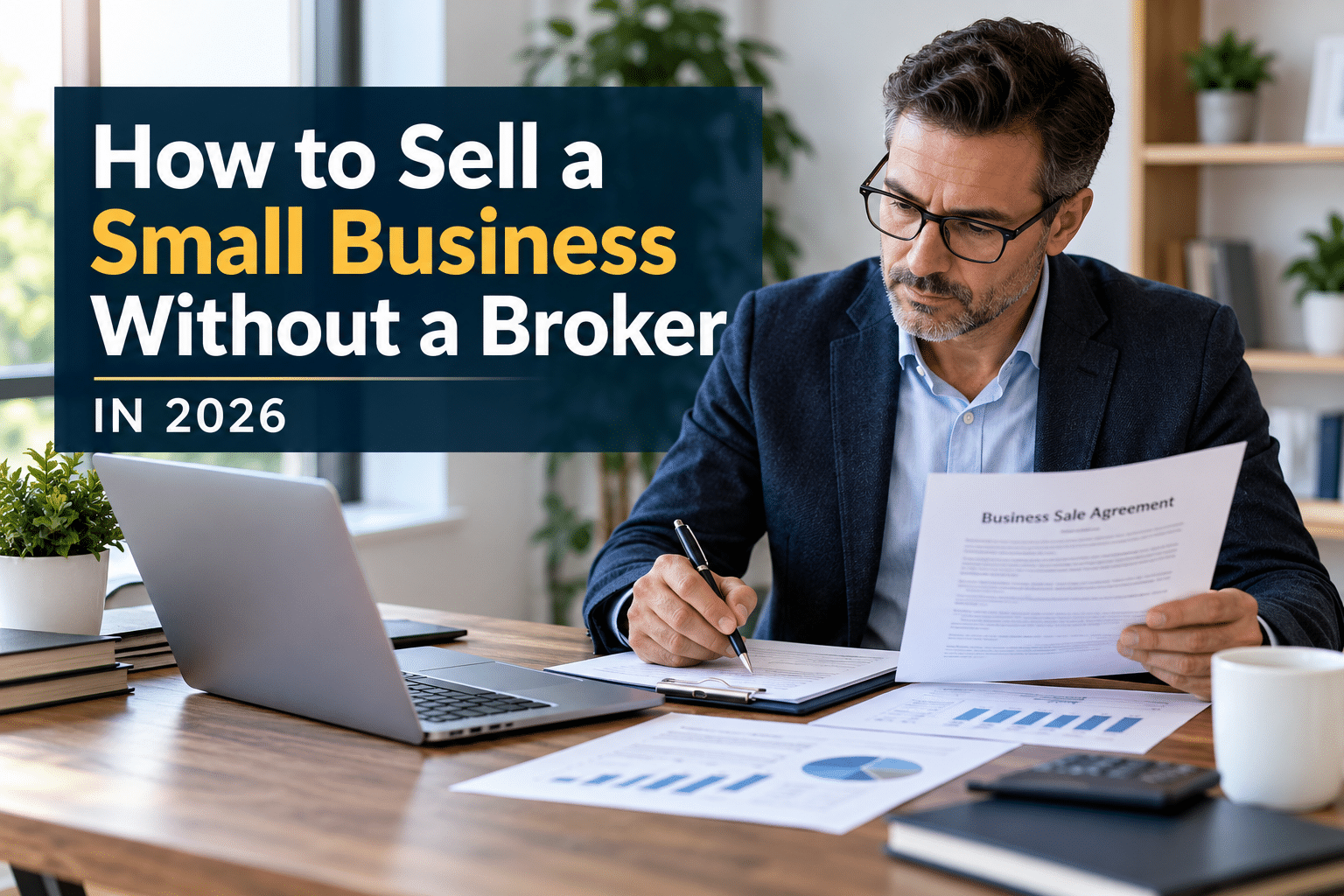
How to Sell a Small Business Without a Broker in 2026

How to Sell a Small Business Without a Broker in 2026

Selling your company is a major financial decision, but hiring a business broker isn’t your only option. Learning how to sell a small business without a broker can help you avoid brokerage commissions, maintain control over negotiations, and manage the transaction on your own terms.

However, selling independently requires more than finding an interested buyer. You must determine your company’s value, prepare accurate financial records, protect confidential information, screen potential buyers, negotiate deal terms, and navigate due diligence.

This comprehensive guide explains how to sell your business yourself in 2026, including the professional assistance you may still need to protect your financial interests.

Can You Sell a Small Business Without a Broker?

Yes. Business owners can sell their companies directly without hiring a business broker.

This approach is sometimes called a for-sale-by-owner business transaction. The owner assumes responsibility for marketing the company, identifying buyers, managing negotiations, and coordinating the sale.

Selling independently can be practical when you already have an interested buyer, operate a relatively straightforward business, or have experience with business transactions.

However, eliminating the broker doesn’t eliminate the need for professional support. An experienced transaction attorney, accountant, and business valuation specialist can still play important roles.

Why Sell Your Small Business Without a Broker?

Before deciding whether to handle the sale independently, consider the financial and operational implications.

Save on Brokerage Commissions

Business brokers commonly charge a success fee based on the final transaction value. Commission structures vary according to business size, industry, and the services provided.

Selling independently may eliminate that expense, although legal fees, accounting costs, valuation expenses, and marketplace listing fees may still apply.

Maintain Control Over the Sale

Managing your own sale gives you direct control over your asking price, marketing strategy, buyer communications, and negotiation timeline.

You can evaluate offers personally and determine which transaction terms align with your financial and personal objectives.

Manage Confidentiality

Selling without a broker allows you to communicate directly with prospective buyers and determine when sensitive information is disclosed.

However, you must establish your own confidentiality procedures, including nondisclosure agreements and secure document sharing.

Understand the Potential Challenges

An independent sale can demand substantial time and specialized knowledge. Owners must balance daily operations with marketing, buyer screening, negotiations, and due diligence.

Without professional guidance, pricing errors, inadequate buyer screening, or unfavorable contract terms can create financial risks.

How to Sell a Small Business Without a Broker: 8 Steps

Your business sale roadmap

  1. Prepare your business for sale
  2. Determine its market value
  3. Create a confidential marketing package
  4. Find and qualify potential buyers
  5. Negotiate an offer and letter of intent
  6. Complete buyer due diligence
  7. Finalize the purchase agreement
  8. Close the transaction and transfer ownership

Step 1: Prepare Your Business for Sale

Preparing your company before approaching buyers can help prevent delays and strengthen your negotiating position.

Start by examining the financial, operational, and legal aspects of your business.

Organize Your Financial Statements

Gather three to five years of available financial documentation, including:

  • Profit and loss statements

  • Balance sheets and cash flow statements

  • Federal and state tax returns

  • Accounts receivable and payable records

  • Outstanding loan and debt information

Reconcile discrepancies between your accounting records and tax returns. Work with your accountant to document legitimate adjustments to earnings.

Buyers and lenders need reliable financial information to assess the company’s historical performance and ability to generate future cash flow.

Reduce Owner Dependency

A company that relies heavily on its owner for sales, operations, or customer relationships may present additional acquisition risks.

Document important business processes, establish clear employee responsibilities, and organize customer and supplier information.

Demonstrating that the company can operate after your departure can make the transition easier for a prospective buyer.

Review Business Assets and Contracts

Prepare an inventory of equipment, real estate, intellectual property, and other assets that may be included in the sale.

Review leases, supplier agreements, customer contracts, employee arrangements, and outstanding liabilities.

Identify agreements requiring third-party consent before transferring ownership.

Step 2: Determine Your Small Business’s Market Value

Establishing a defensible asking price is one of the most important parts of selling your company independently.

An unrealistic asking price may discourage qualified buyers, while an undervalued business could leave substantial proceeds on the table.

Understand Common Business Valuation Methods

Valuation method Typical application
Seller’s discretionary earnings (SDE) Smaller owner-operated businesses
Adjusted EBITDA Established businesses with transferable management structures
Market comparisons Businesses with relevant comparable transactions
Asset-based valuation Asset-intensive businesses and certain other situations
Discounted cash flow Businesses with reasonably supportable financial forecasts

For many smaller owner-operated businesses, SDE provides a useful starting point.

SDE generally begins with business earnings and incorporates appropriate adjustments for owner compensation, certain discretionary expenses, and other qualifying items.

A valuation may apply a market-supported multiple to normalized SDE or EBITDA, depending on the business.

However, valuation multiples differ significantly across industries and individual companies.

Customer concentration, recurring revenue, management depth, working capital, and future growth prospects can all affect the final transaction value.

Consider hiring an independent valuation professional before publishing your asking price.

Step 3: Create a Confidential Business Sale Listing

Once you have established an asking price, prepare marketing materials that communicate the company’s strengths without exposing sensitive information.

Start with a confidential business summary describing the company’s industry, approximate location, operating history, revenue, profitability, and growth opportunities.

Avoid publicly disclosing customer lists, proprietary information, or sensitive financial records.

Prepare a more detailed confidential information memorandum for qualified buyers who have signed an appropriate nondisclosure agreement.

Your marketing materials should accurately represent the business and avoid unsupported earnings or growth claims.

Step 4: Find and Screen Qualified Buyers

Finding potential buyers is only part of the process. You must also determine whether they have the financial capacity and genuine interest required to complete an acquisition.

Where to List Your Business for Sale

Several established marketplaces allow business owners to advertise acquisition opportunities.

Small Business Acquisitions Grow, Sale Prices Decline: Buyer-Seller Confidence Wavers Amid Tariffs and Economic Uncertainty

BizBuySell

A business-for-sale marketplace covering small businesses, franchises, and other acquisition opportunities.

BusinessBroker.net Review (Everything To Know)

BusinessBroker.net

A marketplace featuring businesses and franchises for sale across various industries.

Flippa Launches Partner Market to Help Online Businesses Drive Growth

Flippa

A marketplace focused on digital businesses, websites, ecommerce stores, and other online assets.

Visit Flippa

You can also approach potential strategic buyers, industry contacts, or existing management team members.

Verify Financial Qualifications

Before sharing detailed financial information, request reasonable evidence of the buyer’s ability to fund the acquisition.

Depending on the transaction, this may include proof of funds, lender prequalification, or information about the buyer’s financing arrangements.

Discuss the buyer’s acquisition timeline and any important contingencies.

Protect confidential information throughout the screening process.

Step 5: Negotiate the Offer and Letter of Intent

After identifying a qualified buyer, begin negotiating the proposed purchase price and transaction structure.

Evaluate the complete offer rather than focusing exclusively on the headline purchase price.

Important terms include the amount paid at closing, seller financing, earnout provisions, working capital adjustments, and the length of the ownership transition.

Once the parties agree on preliminary terms, they typically prepare a letter of intent (LOI). An LOI outlines the proposed transaction and may establish exclusivity and confidentiality obligations.

Have your attorney review the document before signing. Some LOI provisions may be legally binding even when the proposed acquisition itself is not.

Step 6: Manage Buyer Due Diligence

During due diligence, buyers verify the financial, legal, and operational information presented during negotiations.

Prepare a secure virtual data room containing financial statements, tax returns, contracts, employee information, insurance records, and relevant corporate documents.

Buyers may also investigate customer concentration, outstanding liabilities, litigation, regulatory compliance, and the condition of business assets.

Respond accurately to reasonable information requests and maintain a record of documents shared.

Unresolved discrepancies can lead to price adjustments, revised transaction terms, or a buyer withdrawing from the acquisition.

Step 7: Finalize the Business Purchase Agreement

After completing due diligence, work with an experienced transaction attorney to prepare the definitive purchase agreement.

The agreement should address the purchase price, assets or equity being transferred, payment terms, representations and warranties, closing conditions, and post-closing responsibilities.

The

U.S. Small Business Administration’s guidance on selling a business

emphasizes documenting the assets and liabilities involved and obtaining legal review of the sales agreement.

Your attorney should also help determine whether an asset sale or equity sale is appropriate for your circumstances.

Step 8: Close the Sale and Transfer Ownership

Closing involves satisfying the remaining contractual conditions, transferring the agreed assets or ownership interests, and completing the required payments.

Depending on the transaction, you may need to obtain landlord consent, transfer intellectual property, arrange license applications, settle outstanding obligations, or establish escrow arrangements.

Consult your accountant about the tax treatment of the sale. For qualifying business asset acquisitions, the IRS generally requires both buyer and seller to report the allocation of the purchase price using Form 8594.

After closing, follow the agreed transition plan to introduce the new owner to employees, customers, and suppliers.

Common Mistakes When Selling Without a Broker

Selling independently can reduce transaction expenses, but avoidable mistakes can still affect your proceeds.

Overpricing your company, sharing confidential information prematurely, accepting an unqualified buyer, and entering negotiations without understanding your financial position are common risks.

Another mistake is relying on verbal agreements rather than properly documented transaction terms.

Finally, don’t overlook the tax consequences of the deal or the financial risks associated with seller financing.

Frequently Asked Questions

Can I sell my small business without a broker?

Yes. Business owners can manage their own sales, including valuation, marketing, buyer screening, and negotiations. Legal and accounting professionals can assist with specialized transaction requirements.

How much does it cost to sell a business without a broker?

Costs depend on the transaction’s complexity. Common expenses include legal services, accounting, professional valuation, marketplace listings, and due diligence support. Selling independently may eliminate brokerage commissions but not these other costs.

How do I find buyers without a business broker?

Consider established business-for-sale marketplaces, industry contacts, strategic competitors, and qualified individuals in your professional network. Protect confidential information and screen buyers before sharing detailed records.

Do I need a lawyer to sell my business?

Although the legal requirements vary by jurisdiction and transaction structure, hiring an experienced business transaction attorney is strongly advisable. An attorney can prepare and review agreements, address transfer requirements, and help protect your interests.

How long does it take to sell a small business without a broker?

The timeline depends on the business’s financial condition, asking price, buyer demand, financing arrangements, and due diligence requirements. Preparing financial and legal documentation before marketing can help reduce unnecessary delays.

Conclusion: Sell Your Business on Your Own Terms

Understanding how to sell a small business without a broker gives you greater control over your exit strategy and may reduce your transaction expenses.

The key is to approach the sale systematically. Prepare your financial records, establish a defensible valuation, protect confidential information, qualify buyers, and negotiate carefully.

You can manage the process independently while obtaining professional assistance for complex financial, tax, and legal matters.

Ready to explore your business sale options? Schedule a free consultation to discuss your business valuation, exit planning, and next steps.

https://calendly.com/bizprofitpro