Archives April 2025

How to Sell Your Business Directly to Buyers

Thinking about selling your business? You’re not alone. Thousands of small business owners reach a point where they’re ready to move on—whether it’s to retire, pursue a new venture, or simply cash in on years of hard work. But here’s something more owners are realizing: you don’t always need a broker to close the deal. If you want more control (and to avoid those hefty commission fees), learning how to sell your business directly to buyers might be your smartest move.

Let’s walk through the process step by step, so you can make a confident, informed sale—on your terms.

Why Sell Your Business Directly to Buyers?

There are a few clear benefits when you choose to sell your business directly to buyers:

  • No brokerage fees: You keep more of the sale price—often saving tens of thousands of dollars.

  • Direct communication: You’re in control of negotiations and can build trust with the buyer from the start.

  • Flexibility: You set the pace, define the priorities, and decide who’s the right fit to take over.

While this approach requires more effort, the payoff can be worth it if you’re organized and ready to guide the process.

How to Sell Your Business Directly to Buyers

Step 1: Get Your Business Ready for Sale

Before listing your business or talking to potential buyers, take time to prepare. A well-prepped business attracts serious buyers and allows for a smoother transition.

  • Organize your financials: Clean, accurate financial records are a must. Have at least 2–3 years of profit and loss statements, balance sheets, and tax returns available.

  • Tidy up operations: Standardize processes, ensure vendor and employee agreements are clear, and make your business as “turnkey” as possible.

  • Resolve any issues: Clear up debts, fix compliance gaps, and update legal documents like leases or licenses.

  • Get a business valuation: Understanding your company’s worth will help you price it competitively. You can use online valuation tools, financial advisors, or comparables in your industry.

When your business is polished and presentable, it becomes much easier to sell business directly to buyers without relying on a third party to make the pitch.

Step 2: Find the Right Buyers

You don’t need a broker’s rolodex to find potential buyers. Here are a few ways to connect directly:

  • Online marketplaces: Platforms like BizBuySell, Flippa, and BusinessesForSale.com make it easy to list your business and reach a wide audience.

  • Your website and email list: Let your community know you’re selling. If your business has a loyal following, you might already have buyers in your orbit.

  • Industry networks: Reach out to competitors, suppliers, or professionals in your field. Someone might be looking to expand.

  • Social media and LinkedIn: Announce discreetly or through targeted messages. Many buyers are actively scouting on these platforms.

  • Local business events: Attend meetups, chamber of commerce events, or trade shows where business owners and investors gather.

The key is to treat your business like a product. Highlight what makes it attractive and explain the benefits of ownership clearly.

Step 3: Qualify Your Buyer

Not every inquiry is a good fit. Before you dive into negotiations, make sure the buyer is serious and financially capable.

Ask questions like:

  • What interests you about this business?

  • Do you have relevant industry experience?

  • How do you plan to finance the purchase?

You can also request a letter of intent (LOI) or proof of funds early in the process. These steps help you weed out tire-kickers and focus on genuine prospects.

Step 4: Negotiate the Terms

Once you’ve found a qualified buyer, it’s time to discuss terms. Since there’s no broker in the middle, it’s up to you and the buyer to negotiate fairly and clearly.

What to cover:

  • Purchase price: Is it a lump sum or will you offer seller financing?

  • Assets included: Will equipment, inventory, or real estate be part of the deal?

  • Transition period: Are you staying on for a few weeks or months to train the new owner?

  • Payment structure: Discuss any contingencies, deposits, and closing timelines.

Even if you’re selling the business yourself, consider hiring an attorney to help draft the final purchase agreement and ensure everything is legally airtight.

Step 5: Close the Deal and Transfer Ownership

After terms are agreed on, you’ll need to:

  • Finalize the purchase agreement

  • Set a closing date

  • Transfer licenses, contracts, and assets

  • Handle employee communications and customer transitions

This is where the preparation from earlier really pays off. A smooth transfer builds buyer confidence and protects your reputation—even after you walk away.

Tips to Sell Your Business Directly to Buyers

  • Stay professional: Treat your sale like a formal process, not a casual conversation. Keep clear records of every interaction.

  • Be transparent: Disclose issues upfront. It builds trust and avoids surprises during due diligence.

  • Know your walk-away number: Decide ahead of time the minimum offer you’ll accept so you don’t feel pressured later.

  • Get help when needed: You don’t need a broker, but a lawyer or accountant can still be invaluable during the final steps.

You Can Sell Business Directly to Buyers with Confidence

Choosing to sell business directly to buyers gives you freedom, saves you money, and lets you stay in control of one of the biggest decisions of your professional life. With the right prep, clear communication, and a little patience, you can guide your sale from start to finish and feel good about the outcome.

It might feel overwhelming at first, but remember—you’ve already built the business. You’re more than capable of selling it, too.

A Guide to Selling a Business Without Brokerage Fees

Selling a business is a major decision and it can come with a hefty price tag if you hire a business broker. However, selling a business without brokerage fees is a feasible and rewarding option if you’re willing to put in the effort. By handling the sale process yourself, you can save on commission fees, which typically range from 8% to 12% of the final sale price.

In this guide, we’ll walk you through the steps to sell your business without involving a broker and show you how to save money and still get the best possible deal.

Why Consider Selling a Business Without Brokerage Fees?

Before diving into the details, you might be wondering, Why should I sell my business without a broker? Here are a few reasons why this approach might be right for you:

1. Save on Brokerage Fees

The most obvious reason is to save on the commission fees that brokers typically charge. Brokers can take up to 10% of the sale price, which can add up to a significant amount, especially if you’re selling a high-value business.

2. Full Control Over the Process

When you sell a business on your own, you have full control over every aspect of the process, from pricing to negotiations. You can choose how to market your business, set your own timeline, and decide what’s most important for you in the sale.

3. Direct Communication with Buyers

By selling your business directly, you get to build a relationship with potential buyers and manage negotiations without a middleman. This can help ensure that the deal aligns with your goals and that you’re getting the right value for your business.

How to Sell a Business Without Brokerage Fees: A Step-by-Step Guide

Step 1: Prepare Your Business for Sale

Selling a business isn’t just about posting an ad and waiting for the offers to come in. The first step in selling a business without brokerage fees is preparing your business for sale. This includes getting your financials in order and addressing any issues that could affect the value of your business.

  • Get your financials ready: Buyers will want to see detailed financial records, including profit-and-loss statements, balance sheets, tax returns, and any other relevant financial information. Make sure everything is organized and up-to-date.

  • Resolve any legal or operational issues: Address any outstanding contracts, debts, or operational inefficiencies that could make the business less attractive to buyers.

  • Value your business: It’s crucial to know how much your business is worth. You can do this by looking at comparable sales in your industry, using online valuation tools, or seeking the help of a professional appraiser.

Step 2: Market Your Business for Sale

Once your business is in good shape, it’s time to get the word out. Here are some ways to effectively market your business without a broker:

  • Online Business Marketplaces: Websites like BizBuySell, BusinessBroker.net, and Flippa allow you to list your business for sale. These platforms attract a broad audience of potential buyers, and they offer tools to help you market your business effectively.

  • Industry-specific networks: If your business is in a niche market, consider targeting buyers within your industry. Reach out to industry groups, trade publications, or niche business-for-sale sites.

  • Social Media and Your Network: Leverage your personal and business networks to spread the word. Post about the sale on LinkedIn, Facebook, or other relevant platforms. You can also reach out to business partners, suppliers, and customers who might be interested or know someone who is.

  • Your Website: Add a listing to your business website or blog that highlights the sale. You can include a landing page with detailed information about your business, its financials, and why it’s a good investment opportunity.

Step 3: Screen Potential Buyers

Finding the right buyer is one of the most important steps in selling a business without brokerage fees. You want someone who is financially capable, motivated, and has a genuine interest in taking over your business.

Here’s how to screen potential buyers:

  • Ask for financial information: Make sure the buyer has the financial means to complete the purchase. Ask for proof of funds or financing options before entering into serious negotiations.

  • Check their background: A good buyer should have experience or interest in your industry. Consider conducting interviews or meetings to assess their qualifications and commitment.

  • Understand their motivation: You’ll want to know why the buyer is interested in your business. Are they looking to expand, or are they simply interested in acquiring assets? Understanding their motivation can help you negotiate better terms.

Step 4: Negotiate the Terms of the Sale

Once you’ve identified a serious buyer, it’s time to negotiate the terms of the sale. As the seller, you’ll want to make sure the deal works for you and your business. Here’s what to consider:

  • Price and payment structure: Agree on a fair sale price and payment terms. Will the buyer pay upfront, or will there be installment payments? Are you willing to offer financing options?

  • Transition period: Most buyers will want you to stay on for a period of time to help them transition into the business. This could be a few weeks or even months, depending on the nature of the business.

  • Assets included in the sale: Determine which assets will be transferred, including intellectual property, inventory, contracts, and physical assets like equipment or property.

  • Contingencies: Make sure both you and the buyer are clear about any contingencies or conditions that need to be met before the sale can close.

Step 5: Finalize the Deal

Once the terms are agreed upon, it’s time to finalize the deal. Even though you’re handling the sale on your own, you’ll still need to work with a lawyer or accountant to ensure everything is legally sound.

  • Draft a sales agreement: Have a professional help you draft a purchase agreement that outlines all the terms and conditions of the sale. This protects both parties and ensures everything is in writing.

  • Transfer ownership: This includes transferring assets, intellectual property, business licenses, and any other relevant documents.

  • Complete the financial transaction: Ensure that the payment is made according to the agreed-upon terms, and the funds are securely transferred.

Helpful Tips for Selling a Business Without Brokerage Fees

  • Stay organized: Keep track of all communications, documents, and agreements related to the sale.

  • Seek professional help when needed: Even though you’re handling the sale without a broker, don’t hesitate to consult with a lawyer or accountant for legal and financial advice.

  • Be patient: Selling a business takes time. It may take months to find the right buyer, so stay patient and don’t rush the process.

Conclusion

Selling a business without brokerage fees can save you a significant amount of money and give you complete control over the process. While it requires more effort on your part, the rewards—financially and emotionally—can be well worth it. By following these steps and staying organized, you can successfully navigate the sale process and find the right buyer for your business.

If you’re ready to get started, make sure your business is in top shape, price it correctly, and market it effectively. With the right approach, selling a business on your own can be a smooth and rewarding experience.

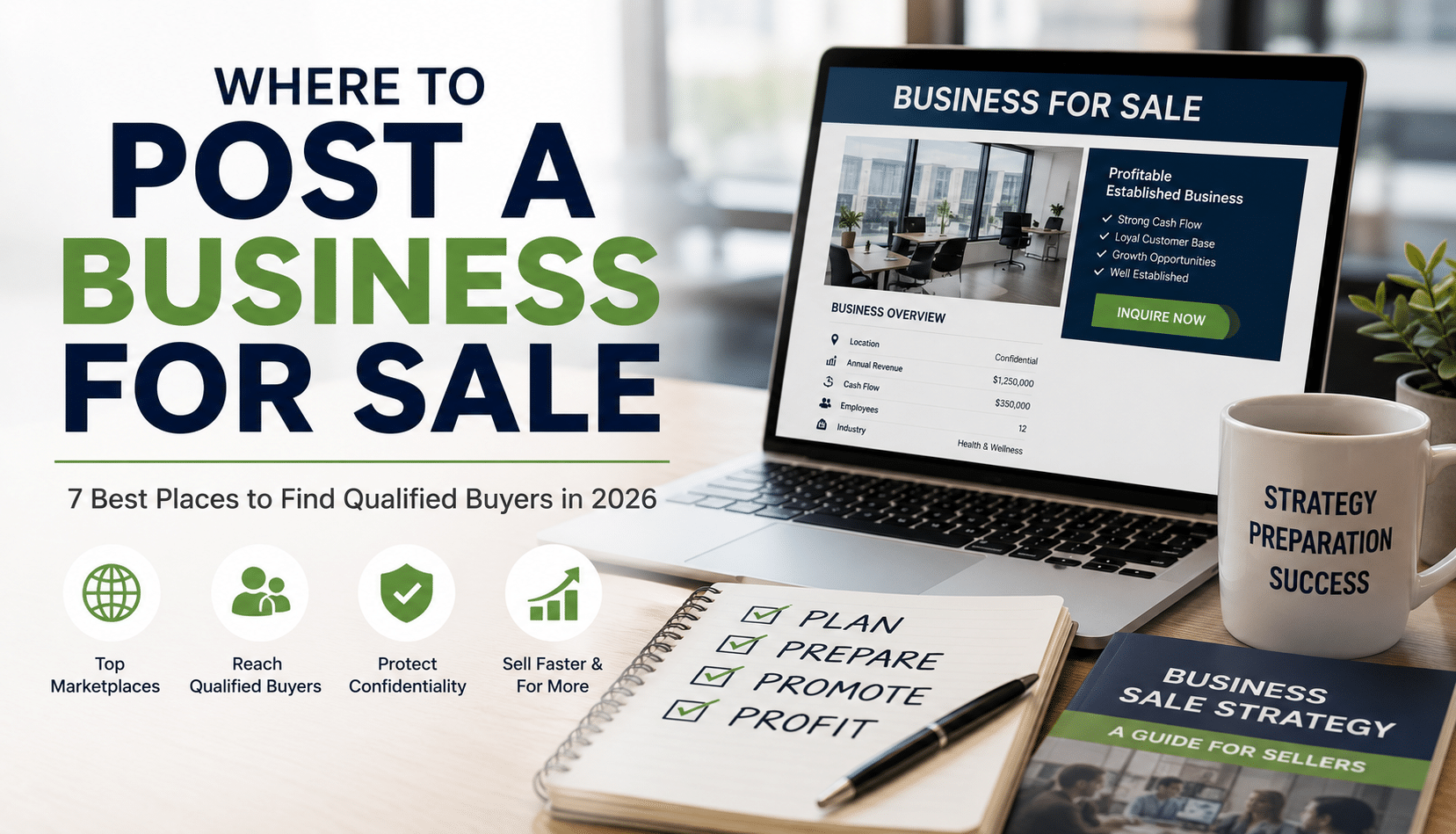
Where to Advertise a Business for Sale in 2026

Selling a business is one of the most important financial decisions you’ll ever make. Whether you’re retiring, pursuing a new opportunity, or planning your next venture, finding the right buyer starts with knowing where to advertise your business for sale.

While there are countless websites and marketing channels available, not all of them attract serious buyers. The right advertising strategy can help you generate qualified inquiries, maintain confidentiality, reduce time on the market, and maximize your business’s value.

In this guide, we’ll explore the best places to advertise your business for sale, explain which platforms work best for different types of businesses, and share practical tips to help you attract the right buyers in 2026.

Why Choosing the Right Advertising Platform Matters

Advertising your business isn’t simply about reaching the largest audience—it’s about reaching the right audience. Entrepreneurs, investors, competitors, and acquisition groups all search for businesses differently, which is why choosing the right platform is essential.

A well-planned marketing strategy can help you:

  • Reach qualified buyers instead of casual inquiries
  • Increase visibility among investors and strategic buyers
  • Protect confidential business information
  • Reduce the time your business spends on the market
  • Improve your chances of receiving competitive offers

Many successful sellers advertise on multiple platforms to maximize exposure while targeting buyers most likely to complete a transaction.

Where to Advertise Your Business for Sale

The best place to advertise depends on your industry, company size, and ideal buyer. Here are some of the most effective options.

1. Business-for-Sale Marketplaces

Dedicated business marketplaces remain one of the best places to advertise a business because they attract buyers actively looking for acquisition opportunities.

Popular marketplaces include:

  • BizBuySell – One of the largest business-for-sale websites, ideal for retail, service, manufacturing, and franchise businesses.
  • BusinessBroker.net – Allows business owners and brokers to list businesses across a wide range of industries.
  • BizQuest – A trusted marketplace with listings for small and mid-sized businesses.
  • BusinessesForSale.com – Offers international exposure for businesses seeking buyers worldwide.

These platforms allow sellers to create detailed listings with financial information, business highlights, and growth opportunities that help buyers evaluate the opportunity.

2. Flippa and Digital Business Marketplaces

If you’re selling an online business, Flippa is one of the leading marketplaces for digital assets.

It’s ideal for:

  • E-commerce stores
  • SaaS businesses
  • Amazon FBA brands
  • Affiliate websites
  • Mobile apps
  • Content-based businesses

Because buyers on these platforms specialize in digital acquisitions, your listing is more likely to reach people who understand your business model.

3. Industry-Specific Marketplaces

Some industries have dedicated websites designed specifically for buying and selling businesses.

These include marketplaces for:

  • Restaurants
  • Dental and medical practices
  • HVAC companies
  • Construction firms
  • Manufacturing businesses
  • Franchise resales

Industry-specific marketplaces often produce higher-quality leads because buyers already understand the market, regulations, and operational requirements.

4. LinkedIn

LinkedIn has become an increasingly valuable platform for connecting with acquisition entrepreneurs, investors, and strategic buyers.

Rather than publicly announcing that your business is for sale, many owners use LinkedIn to:

  • Build relationships with potential buyers
  • Connect with private investors
  • Reach industry executives
  • Network with acquisition entrepreneurs

For B2B companies in particular, LinkedIn can generate high-quality opportunities through professional networking.

5. Local Business Networks

If your company primarily serves a local market, don’t overlook regional marketing opportunities.

Consider advertising through:

  • Local Chambers of Commerce
  • Small Business Development Centers (SBDCs)
  • Business networking groups
  • Industry associations
  • Local business publications

These organizations often have established relationships with entrepreneurs looking to invest within their communities.

6. Strategic Buyers

Sometimes the best buyer isn’t actively browsing listing websites.

Strategic buyers may include:

  • Competitors
  • Suppliers
  • Vendors
  • Distributors
  • Existing business partners

These buyers may be willing to pay a premium because your business complements their existing operations or expands their market share.

Before sharing sensitive information, always require prospective buyers to sign a non-disclosure agreement (NDA).

7. Social Media

Although social media shouldn’t replace dedicated listing websites, it can increase awareness and generate additional inquiries.

Platforms like LinkedIn, Facebook, and industry-specific groups can help you connect with interested buyers.

When using social media, avoid posting confidential financial information publicly. Instead, encourage interested parties to contact you privately for more details.

How to Create a Listing That Attracts Serious Buyers

Choosing the right platform is only half the battle. Your listing should clearly communicate the value of your business while giving buyers enough information to determine whether it’s worth pursuing.

An effective business listing should include:

  • A clear business overview
  • Industry and location
  • Years in operation
  • Revenue or cash flow range
  • Number of employees
  • Products or services offered
  • Competitive advantages
  • Growth opportunities
  • Reason for selling

A professional, transparent listing builds buyer confidence and often results in better-quality inquiries.

Protect Confidentiality Throughout the Sale

Confidentiality is one of the most important aspects of selling a business. Publicly announcing the sale too early can create uncertainty among employees, customers, suppliers, and competitors.

To protect your business:

  • Use blind listings that don’t reveal the company’s identity.
  • Require buyers to sign an NDA before sharing financial records.
  • Release detailed information only after qualifying buyers.
  • Avoid publishing sensitive operational details in public advertisements.

Maintaining confidentiality helps preserve business stability while you search for the right buyer.

Qualify Buyers Before Sharing Financial Information

Not every inquiry comes from a serious buyer. Taking time to qualify prospects can save you countless hours and reduce unnecessary risk.

Before providing detailed financial statements, ask buyers about:

  • Their available capital
  • Financing plans
  • Business ownership experience
  • Acquisition timeline
  • Industry knowledge

Focusing on qualified buyers allows you to spend more time negotiating with people who have the ability and intention to complete the purchase.

Common Mistakes to Avoid

Many business owners make simple mistakes that reduce buyer interest and delay a successful sale.

Avoid these common pitfalls:

  • Overpricing the business without supporting financial data
  • Creating vague or incomplete listings
  • Advertising on only one platform
  • Revealing confidential information too early
  • Delaying responses to interested buyers
  • Failing to prepare financial records before listing

Taking time to prepare your business properly before advertising can significantly improve the quality of buyer inquiries.

Frequently Asked Questions

Where is the best place to advertise your business for sale?

Business-for-sale marketplaces such as BizBuySell, BusinessBroker.net, BizQuest, and BusinessesForSale.com remain some of the most effective platforms because they attract buyers actively searching for acquisition opportunities. Industry-specific marketplaces and LinkedIn can also be valuable depending on your business type.

Can I advertise my business for sale without a broker?

Yes. Many small business owners successfully advertise and sell their businesses without hiring a broker. However, you’ll be responsible for preparing the listing, qualifying buyers, negotiating the deal, and coordinating due diligence.

Should I advertise publicly or confidentially?

Most sellers benefit from confidential listings. Blind listings and signed NDAs help protect employees, customers, and suppliers while still allowing qualified buyers to evaluate the opportunity.

Should I advertise on more than one website?

Yes. Listing your business on multiple reputable platforms increases exposure and improves your chances of connecting with qualified buyers. Just make sure your information remains consistent across every listing.

Final Thoughts

Knowing where to advertise your business for sale is one of the most important steps in attracting qualified buyers and achieving a successful transaction. By combining reputable business marketplaces, industry-specific websites, professional networking, and strategic outreach, you can significantly improve your chances of finding the right buyer while protecting your business throughout the sales process.

Before creating your listing, it’s equally important to understand what your business is worth. A realistic asking price backed by accurate financial information attracts stronger buyers, supports smoother negotiations, and helps you maximize the value of everything you’ve built.

Ready to sell your business? Start with a free preliminary business valuation to gain a better understanding of your company’s market value before bringing it to market. Pricing your business correctly from the beginning can help you attract qualified buyers and move confidently toward a successful sale.